
Replacing Your Windows: Signs It's Time and How the Job Goes

Windows do a lot of quiet work. They let in light, help hold back the weather and shape how a house looks from the curb. When they start to struggle, the signs tend to appear slowly, which makes them easy to overlook.
Below are signs homeowners often notice, and what usually happens once a crew arrives.
Signs a window may be wearing out
Fog between the panes. Many windows hold layers of glass apart with a sealed gap between them. When that seal fails, moisture can creep in and cloud the glass from the inside, where no cloth can reach it.
Drafts beside a closed window. You may feel moving air near a window that is shut and latched. That can mean the frame, the weatherstripping or the seal around the opening has worn.
Sashes that stick or won't lock. Swollen wood, worn balances or a warped frame can make a window hard to open, hard to keep open or impossible to lock.
Rotting frames. Peeling paint may or may not mean much on its own. Wood that looks swollen, crumbling or darkly stained often points to water getting in, and a contractor can tell you how far it goes.
Stains on the wall or sill below. You may notice water marks on drywall, trim or the sill. They can mean the window is letting moisture into the wall.
More outside noise than you expect. Older glass and loose frames can let street sounds carry indoors.
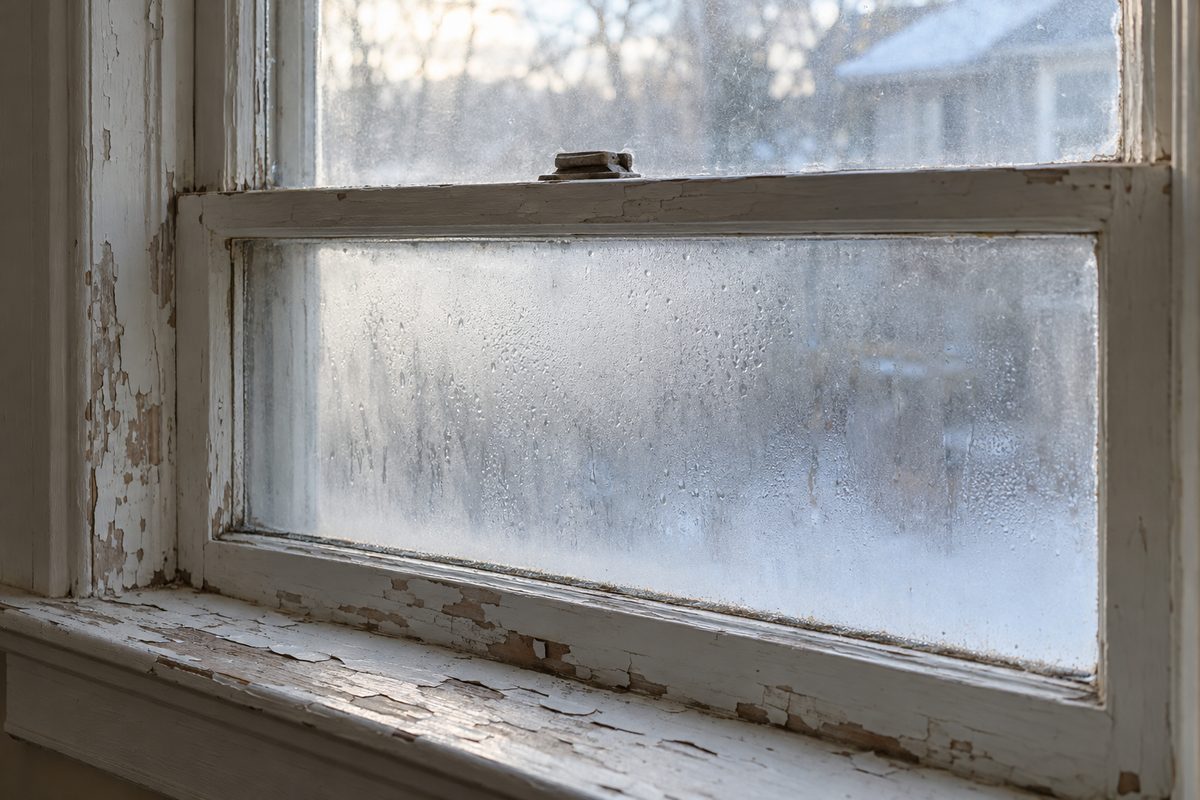
Repair or replace?
Not every tired window needs to come out. When the frame itself is sound, a contractor may suggest new weatherstripping, fresh caulk, new hardware, a replacement sash or a new pane of glass.
Replacement tends to come up when the frame is rotting, the window no longer fits its opening well, several problems show up at once, or parts for an older design are hard to find.
A good contractor should explain which way they lean and why, based on what they see in your home rather than a general rule. If two contractors give you different answers, ask each to walk you through their reasoning.
The choices you will hear about
Replacement windows come in several styles. Double-hung windows slide up and down, casements swing outward on a hinge, sliders move side to side, and picture windows don't open at all. Bay and bow windows project out from the wall.
Frames come in vinyl, wood, fiberglass, aluminum and composite blends. Each has its own look, upkeep and cost range, and the right fit depends on your climate, your home's style and your budget. Glass varies too, from the number of panes to coatings and tints. Ask the contractor what each option would do in your particular home.
How the new window goes in is another choice. With an insert (or pocket) install, the new unit sits within the old frame, and the trim around it stays put. A full-frame replacement strips the old window back to the bare framing of the wall, which lets the crew see and repair what sits behind it. The state of your current frames usually decides which approach makes sense.
What the in-home visit usually covers
Before writing a quote, a contractor typically visits to measure each opening and check the frames, sills and surrounding wall. Expect questions about which windows you want replaced, the styles you like and how you use each room.
A written quote usually lists each window by location, the product and options chosen, the installation method, removal and disposal of the old windows, interior and exterior trim work, and a payment schedule. If something you expected isn't listed, ask whether it is included.
How installation day goes
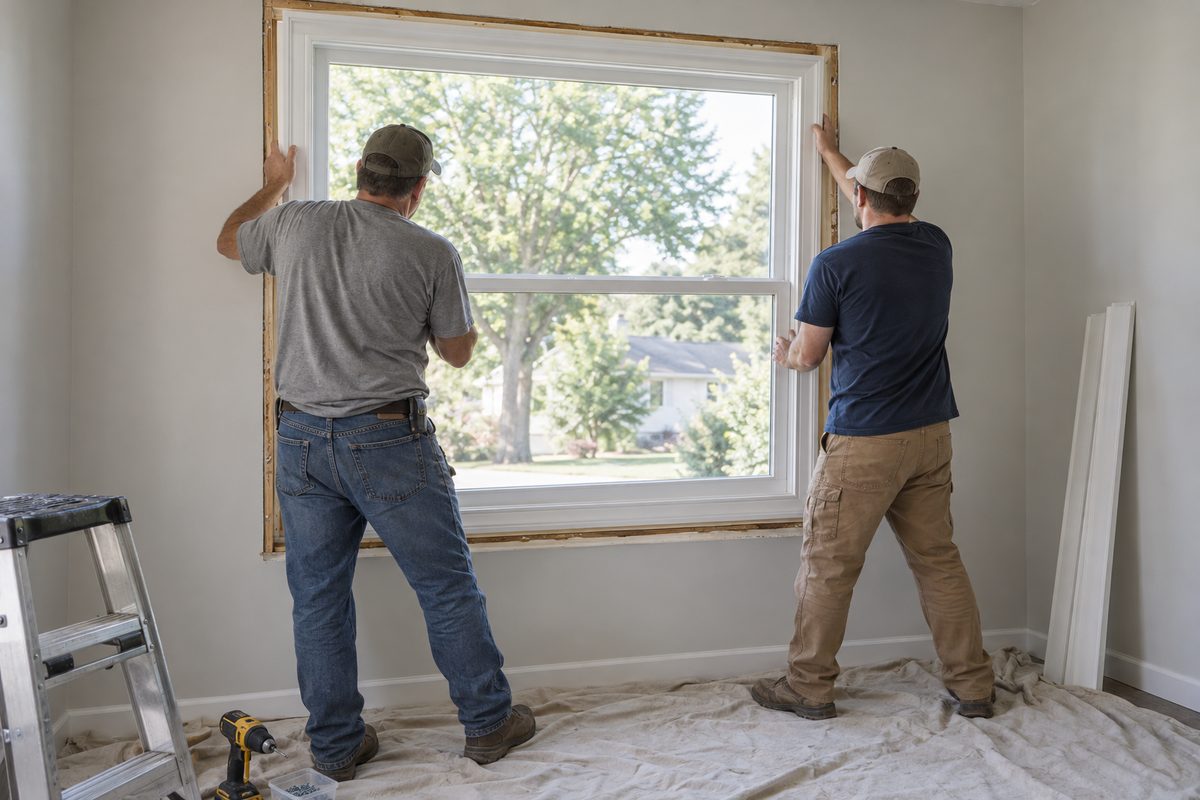
The crew usually works one opening at a time. They cover floors and furniture near each window, remove the old unit, check the opening for damage, then set, level and fasten the new window. Gaps around it are insulated and sealed, and trim is fitted inside and out.
How long the job takes depends on the number of windows, the installation method and what turns up once the old units come out. Hidden rot or water damage can add time. Ask before work starts how the contractor handles surprises like these and how any change to the price gets agreed.
Ask ahead what the crew would like moved and who takes down blinds and curtains. Keep children and pets away from the work area. Window installation, especially on upper floors, is a job for trained professionals with the right safety equipment.
Questions to ask a contractor
- Are you licensed and insured for this work where I live?
- Will your own crew install the windows, or do you use subcontractors?
- Which installation method do you recommend for my home, and why?
- If you uncover damage behind the old windows, how do we decide what to do about it?
- Who arranges any permits the job needs?
- How will you protect my home during the work and clean up afterward?
- What written terms come with the windows and the installation, and who stands behind them?
This guide is general information, not professional advice. No two houses are alike, so ask a licensed professional to look at yours before you settle on any work.