
A New Front Door: Materials, Styles and the Fitting Visit
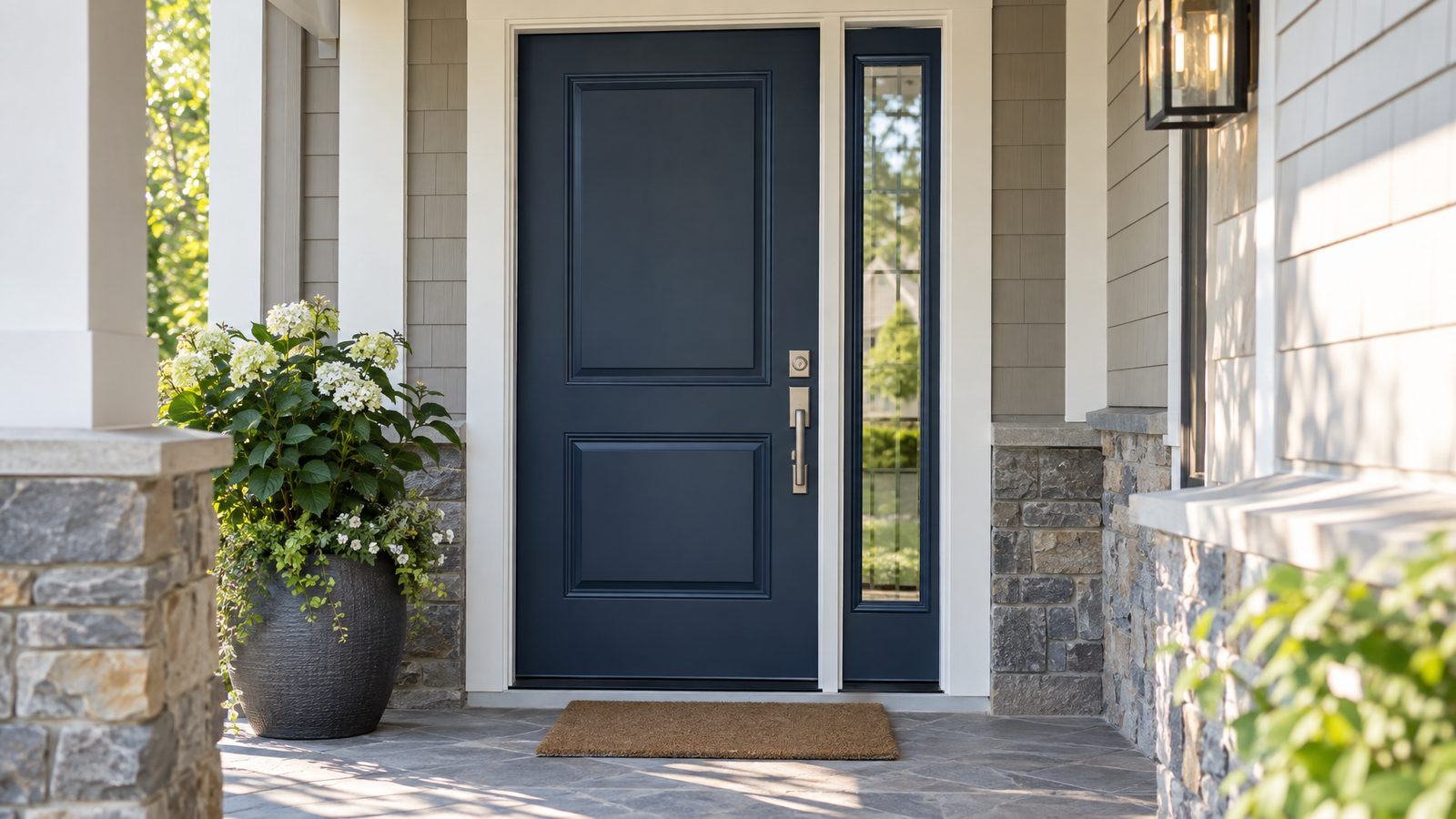
A front door swings open and shut day after day, takes the weather head on and greets everyone who visits.
Here is why people replace one, the choices involved, and what a contractor does from first visit to final latch.
Why homeowners replace a front door
Drafts. A chill near the door on a windy day, or daylight showing around its edges, often means the weatherstripping, the threshold or the door itself no longer seals against the frame.
Sticking or dragging. A door that rubs the frame, scrapes the floor or needs a shove to latch may have swollen, warped or shifted, or the frame around it may have moved.
Wear and damage. Split panels, rot near the bottom, dents, rust spots or a finish that has given up are common reasons to start looking.
Looks. Some owners simply want a door that suits the house better or lets in more light.
Door only, or a pre-hung unit?
There are two broad routes. A slab is the door panel alone, hung in your existing frame on new or reused hinges. It can work when the frame is square, solid and in good shape, though the new slab may need to be trimmed and drilled to fit.
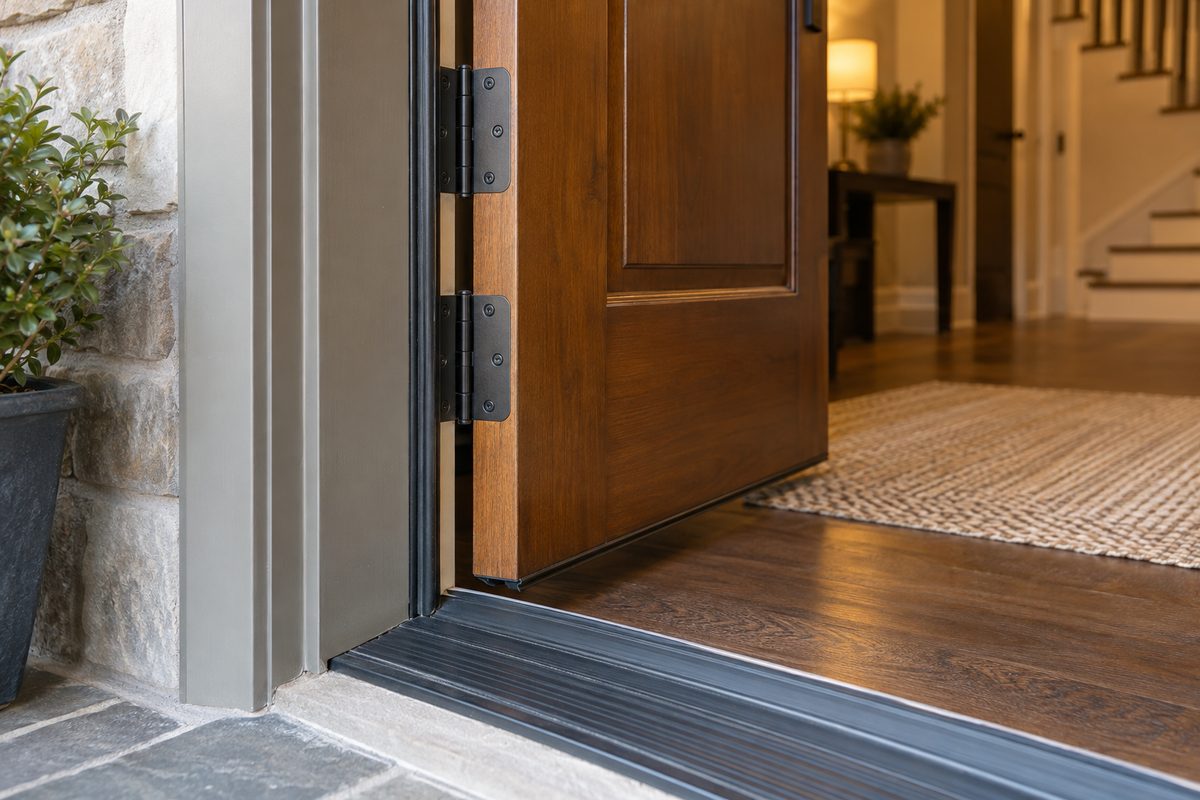
A pre-hung unit arrives with the door already mounted in a new frame, often with the threshold, hinges and weatherstripping in place. The crew removes the old door and frame together and sets the whole assembly into the opening. A contractor usually recommends this route when the old frame is damaged, out of square or rotted at the base.
Steel, fiberglass and wood
Steel doors have a metal skin over a core, with a smooth or embossed surface that is usually painted. They can dent, and a contractor can explain how scratches and dings are typically handled.
Fiberglass doors are molded, often with a texture that mimics wood grain, and can be stained or painted.
Wood doors offer real grain and weight, and come in many species and panel designs. They tend to need more attention to their finish over time, especially when they face strong sun or rain without a deep porch.
Your climate, how exposed the doorway is, your home's architecture and your budget all shape the choice. Ask a contractor how each would do at your entry.
Glass, sidelights and transoms
Glass can fill part of the door or almost all of it, from a small window near the top to a full-length panel. Options include clear, frosted, textured and decorative patterns, with privacy varying a lot between them.
A sidelight is a tall, narrow pane beside the door, on one side or both. A transom is a window set above it. Adding them usually means a wider or taller opening, which turns a simple swap into a bigger framing job, so ask the contractor what that would involve.
Hardware and lock choices
Hardware is where a lot of personality comes in. You will choose between knobs, levers and handlesets with a thumb latch, and among finishes such as black, bronze, brass, nickel or chrome. Many entry doors pair the handle with a separate deadbolt.
Locks come in keyed, keypad and app-connected versions. Think about who comes and goes, whether you want to share access, and how you feel about batteries and phones. A contractor or locksmith can explain how a given lock fits your door and frame.
What the measuring visit and quote cover
Before quoting, a contractor usually comes out to measure the opening, check the frame, sill and surrounding wall for damage, and note which way the door swings. Expect questions about style, glass, color and hardware.
A written quote typically spells out the door and frame, the material and finish, glass and any sidelights, hardware, interior and exterior trim, removal of the old door, disposal and the payment schedule. If you expected something and it isn't listed, ask whether it is included.
How fitting day usually goes
The crew lays down floor protection and takes the old door out. With a pre-hung unit, the old frame comes out too, and the opening is checked for rot or water damage. Any repairs come first.
The new door is then set, shimmed until it sits plumb and level, and fastened in place. Gaps around the frame are filled and sealed, trim goes on inside and out, and the hardware is mounted. The installer then works the door several times to confirm it swings, closes and latches smoothly.
Your entry will be open for part of the day, so keep children and pets well away from the work. Ask beforehand how the contractor handles hidden damage and how any change in price is agreed.
Questions to ask a contractor
- Are you licensed and insured for this work in my area?
- Do you recommend a slab or a pre-hung unit for my doorway, and why?
- What happens to the schedule and price if the frame or sill is rotted?
- Will your crew handle the trim, painting or staining, or is that separate?
- Is a permit involved here, and who applies for it?
- Will the door be locked and weather-tight by the end of the day?
- What written terms come with the door and with your labor?
This guide is general information, not professional advice. No two houses are alike, so ask a licensed professional to look at yours before you settle on any work.