
Replacing a Garage Door: Styles, Openers and What the Crew Does
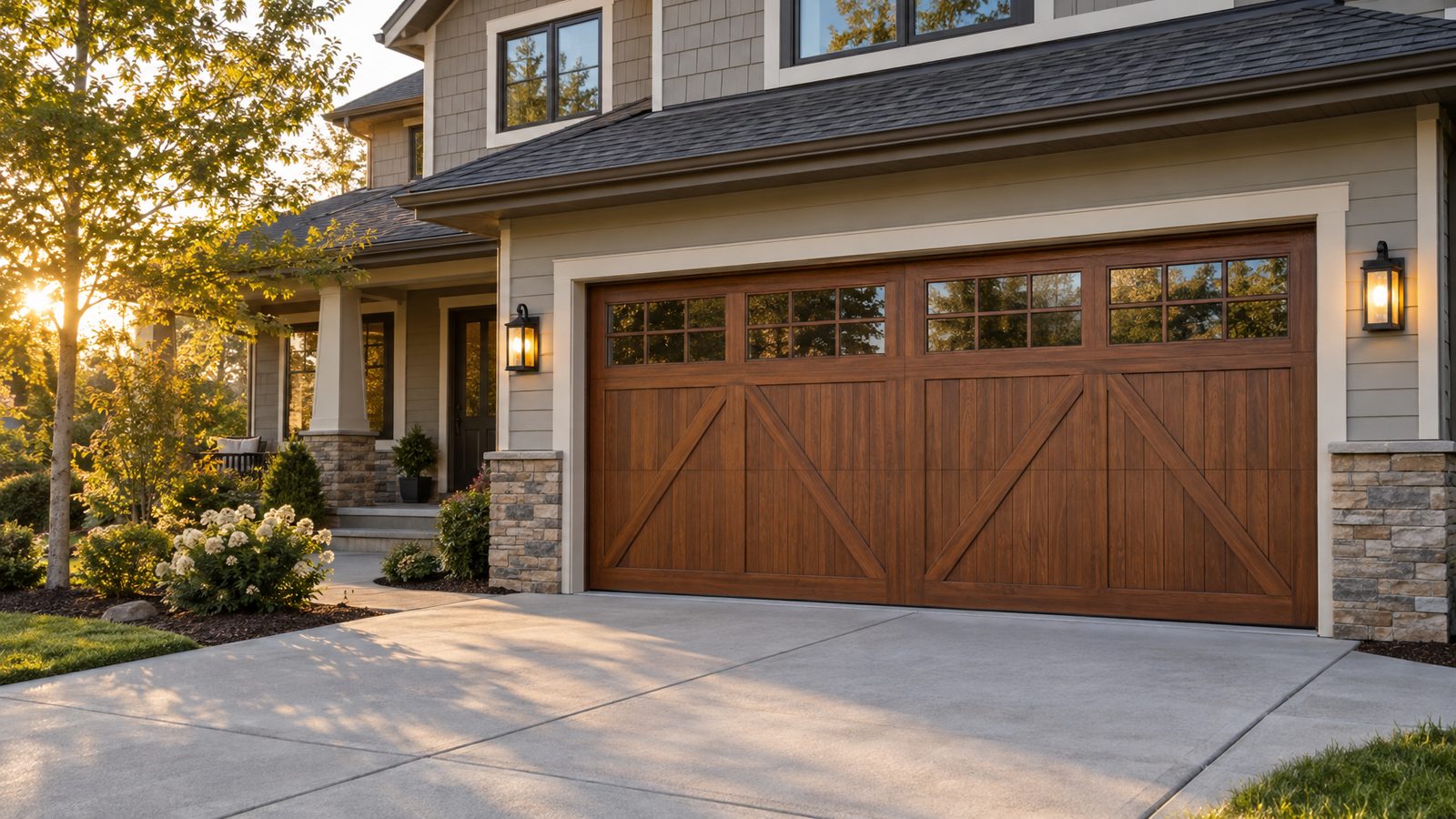
On plenty of houses, the garage door is the biggest thing that moves, and it fills a large part of what passers-by see. It goes up and down many times a week in all weathers, so wear catches up with it sooner or later.
Below: why people replace one, the looks and materials you will be shown, and how the job usually goes.
Why homeowners replace a garage door
Wear and tear. Dented or cracked sections, rust creeping along the lower edge, or one repair after another can tip the decision toward a new door.
Noise. An older door can grow louder as it runs. Many households want something quieter, especially with a bedroom above or beside the garage.
Looks. Since it takes up so much of the front of a house, changing it is one of the more visible updates an owner can make, sometimes alongside new siding or a new entry door.
Damage. A car backing into it, a storm or a falling branch can bend panels or push the door out of line. Stay clear of it and call a trained technician rather than forcing it.
A word on safety
A garage door is heavy, and it carries springs and cables under heavy tension. Springs, cables and openers are work for a trained technician, full stop. Leave them alone.
Styles you are likely to see
Raised panel. A familiar look on many streets: each section has rectangles pressed into it that sit a little proud of the surface.
Carriage-house. Built to look like a pair of old swing-open coach doors, often with decorative handles and strap hinges, though many of them still roll up overhead.
Flush. A smooth face with little or no pattern, sometimes with thin grooves running across. It tends to suit modern, pared-back homes.
With or without windows. Any of these can come with glass or without it. A strip of windows lets daylight into the garage, and frosted or textured glass keeps what is inside out of view.
Materials, in broad strokes
Steel is widely used, in a wide spread of colors and textures, including finishes stamped with a wood grain. It can dent, and coatings vary from one maker to the next.
Wood brings a warm, natural look, takes paint or stain, and can be built to suit an unusual opening. It usually asks for more upkeep; ask the contractor what that would involve.
Composite doors blend wood fibers with resins and are shaped to look like timber, with their own care needs.
Aluminum and glass doors hold large glass panels in slim metal frames: a crisp, modern look and lots of light, with less privacy unless the glass is frosted.
Each copes with sun, salt air and moisture in its own way, so ask which suits your climate.
Insulated or uninsulated
Some doors are a single layer of material. Others have a foam core inside each section, often sealed behind a second skin on the inner face. People often lean toward an insulated door when the garage is attached to the house, has a room above it, or doubles as a workshop or home gym.
Openers
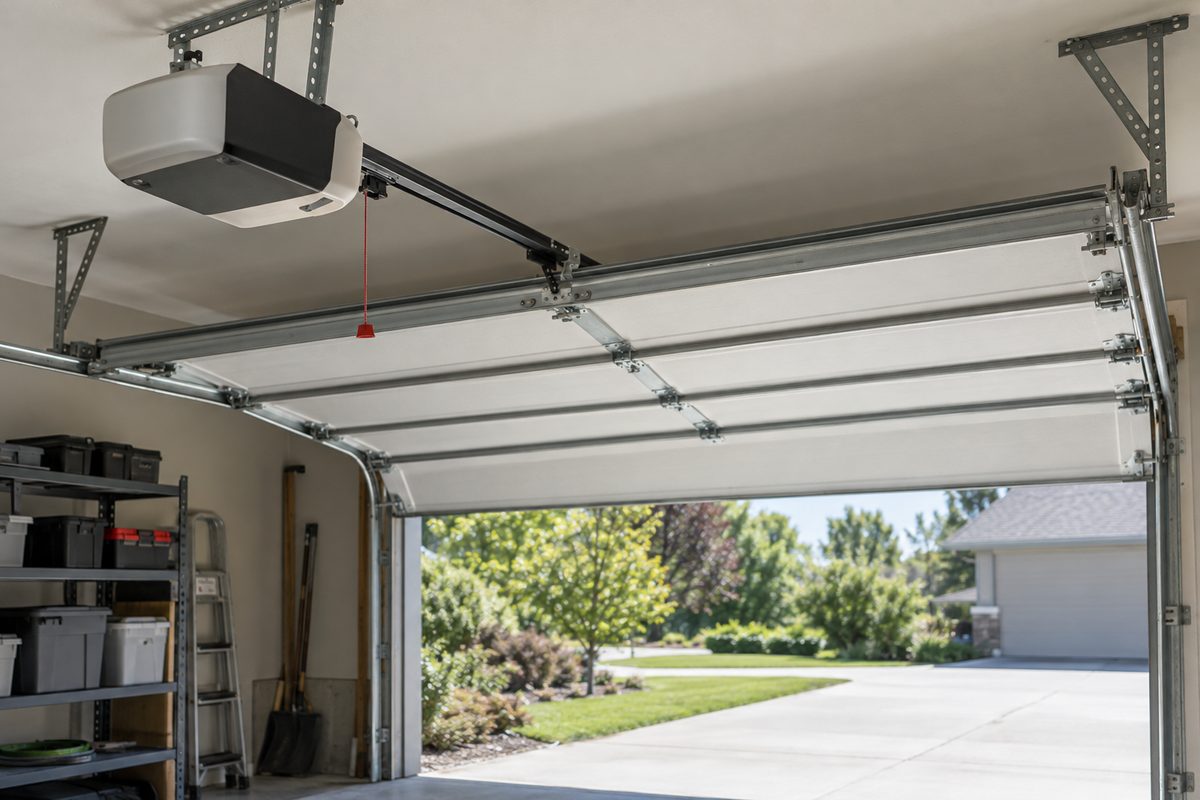
Many garage doors are raised by an electric opener mounted on the ceiling. Openers differ in how loud they run and in their extras, such as an outside keypad, a built-in light, battery backup or control from a phone.
A working opener can sometimes stay with a new door, though a contractor may suggest replacing an older unit at the same time. Ask what they recommend and why.
What the visit and quote usually cover
Before quoting, a contractor typically comes out to measure the opening and look over the framing around it and the space above and beside it. Expect questions about how you use the garage, and samples or photos of styles, colors and glass.
A written quote often lists the door and its finish, whether it is insulated, any glass, the opener if included, taking away the old door, repairs to framing or trim, and how payment works. Ask what written terms come with the door and the labor.
How replacement day usually goes
You will usually be asked to move cars out and clear the area near the door. The crew takes down the old door and its hardware, checks the frame around the opening, then puts up the new door, fits its tracks, connects the opener and seals the edges.
How long it takes depends on the door, the opener and anything the crew finds once the old door is down. Keep children and pets out of the garage meanwhile. Before the crew leaves, have them show you the controls and explain what to do in a power cut.
Questions to ask a contractor
- Are you licensed and insured to do this work in my area?
- Will your own technicians do the installation?
- Does your price cover hauling away the old door?
- Should I keep my current opener or replace it, and why?
- If the framing around the opening turns out to be damaged, how do we handle it?
- Do I need any approval or permit, and who would arrange it?
- What written terms come with the door, the opener and your labor?
This guide is general information, not professional advice. No two houses are alike, so ask a licensed professional to look at yours before you settle on any work.