
Gutters and Gutter Guards: A Plain-English Guide

Gutters are easy to forget until they overflow in a storm. Their job is simple: catch the water running off the roof and send it somewhere harmless. When they clog, sag or leak, that water lands where it shouldn't.
This guide explains how gutters work, the signs homeowners often notice, the main gutter and guard types, and what to ask a contractor.
What gutters do
Rain runs down the roof into the gutter, which slopes toward a downspout. The downspouts carry the water to the ground, where an extension, a splash block or an underground drain moves it away from the house.
Without that path, water pours straight off the roof edge. It can wear away soil, splash dirt onto siding, soak the ground along the foundation and freeze on steps and walkways in cold weather.
Signs your gutters need attention
Homeowners often notice these from the ground or through a window.
- Water spilling over the gutter's edge instead of flowing to the downspout.
- Sections that sag or pull away from the roof edge.
- Drips from seams, corners or holes.
- Rust, peeling paint or cracks on the gutters themselves.
- Stains or streaks on the siding or trim beneath the gutters.
- Puddles, washed-out soil or mulch near the foundation.
- Plants or moss growing out of the gutter.
- Downspouts that empty right next to the wall.
Any of these is a reason to have a professional take a closer look. They will also check the boards the gutters hang from, since water that gets behind a gutter can rot them.
Types of gutters
Materials. Gutters come in aluminum, vinyl, steel, copper and zinc. They differ in look, weight, upkeep and cost, and in how they handle your climate. A contractor can explain which ones they install and why.
Shapes. K-style gutters have a flat back and a decorative front that resembles crown molding. Half-round gutters are a rounded trough, often seen on older or traditional homes.
Sectional or seamless. Sectional gutters are joined from shorter pieces, so each run has seams. Seamless gutters are formed on site from a roll of metal, cut to the length of each run, so joints appear mainly at corners and downspouts.
Size. Gutters and downspouts come in different widths. The right size depends on how much roof drains into each run, how steep the roof is and how heavy rain gets where you live. Sizing is part of what a contractor works out.
Gutter guards
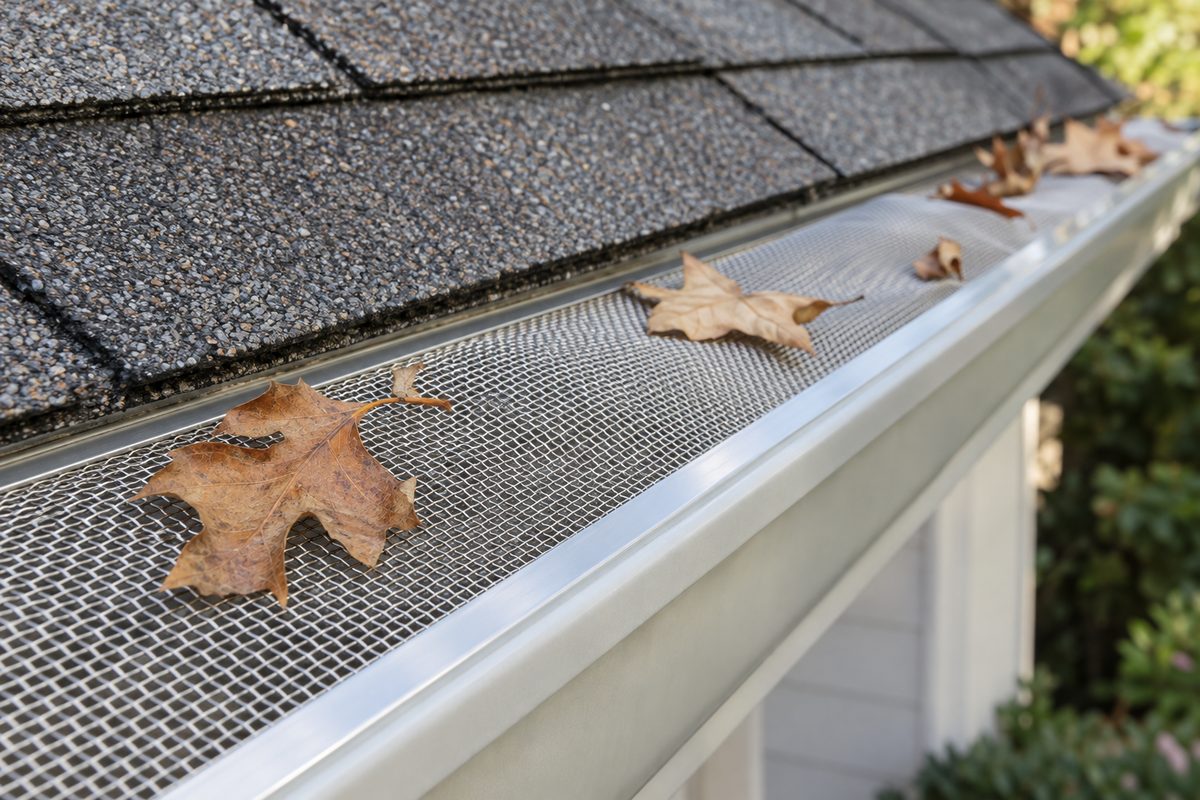
A gutter guard covers the gutter. It is meant to keep leaves and debris out while letting water in. There are a few main kinds.
Mesh and micro-mesh screens lay a fine metal or plastic screen over the gutter. Screens come in different weaves, and seeds or needles can still gather on top.
Perforated covers are solid panels with holes or slots that let water drop through.
Reverse-curve covers use a rounded front edge. They are designed so water follows the curve into the gutter while leaves fall away.
Inserts are foam or brush pieces that sit inside the gutter and fill the space where debris would otherwise settle.
No guard removes the need for upkeep altogether. The right type depends on the trees near your home and the kind of debris they drop. Ask what upkeep each option needs and who usually handles it, how it attaches, and whether it fits your existing gutters or works with new ones.
What the visit and quote usually cover
A contractor will typically measure each run, check the boards behind the gutters and the roof edge, look at nearby trees, and note where each downspout empties.
A written quote usually lists the material and its thickness, the gutter shape and size, whether it is seamless or sectional, the number and placement of downspouts, the hangers and how far apart they sit, removal of old gutters, any board repairs, the guard type if you want one, and cleanup.
Gutter work happens at roof height, often close to the power lines running to the house. It is a job for a professional crew with the right training, safety equipment and insurance.
Questions to ask a contractor
- Are you licensed, where required, and insured for this work?
- Do you recommend seamless or sectional gutters for my home, and why?
- What size gutters and downspouts does my roof need?
- How will the gutters be attached, and how far apart will the hangers be?
- Will you check and repair the boards behind the gutters?
- Where will each downspout send the water?
- If I add guards, how do they attach, what upkeep do they need, and who does it?
- Will you remove and haul away the old gutters?
This guide is general information, not professional advice. No two houses are alike, so ask a licensed professional to look at yours before you settle on any work.